
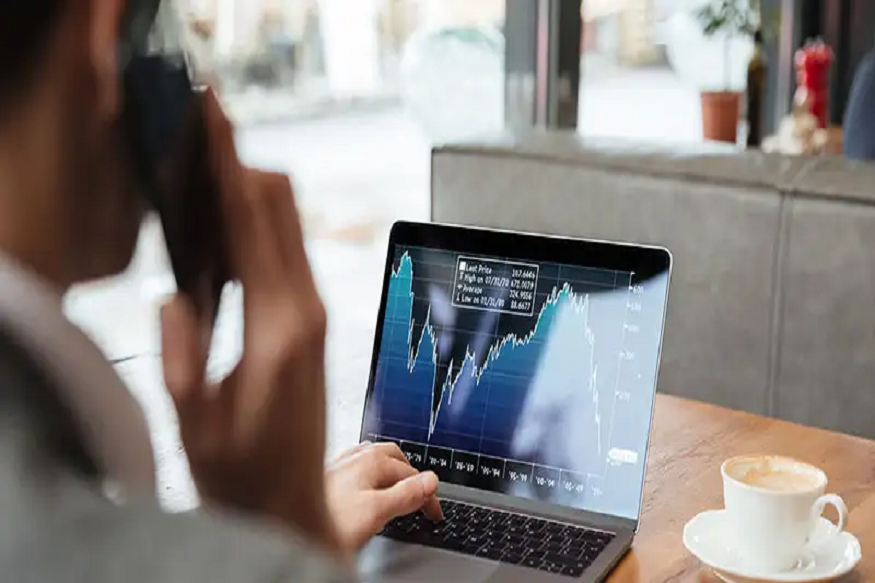
How Options Trading Works in Modern Financial Markets
Financial markets offer investors many ways to participate in economic growth, manage risk, and pursue financial goals. While stocks and bonds remain familiar investment vehicles, options have become increasingly popular among both individual and institutional market participants. Their flexibility allows traders to speculate on price movements, hedge existing investments, and create strategies tailored to different market conditions.
Despite their growing popularity, options can appear complex to newcomers. The terminology, pricing models, and strategy variations often create a barrier to understanding. However, once investors grasp the fundamental principles behind options contracts, they can better appreciate how these instruments function within modern financial markets and why they play such an important role in today’s investment landscape.
Understanding the Basics of Options Contracts
An option is a financial contract that gives the buyer the right, but not the obligation, to buy or sell an underlying asset at a predetermined price before a specific expiration date. The underlying asset is often a stock, exchange-traded fund, index, or other tradable security. This distinction between a right and an obligation is what separates options from many other financial instruments.
There are two primary types of options: call options and put options. A call option gives the holder the right to buy an asset at a set price, while a put option gives the holder the right to sell an asset at a predetermined price. Investors choose between these contracts based on their expectations about future market movements. Calls are generally associated with bullish outlooks, while puts are commonly used when anticipating declines or seeking protection against losses.
Read More: CFDS: THE HIGH-SPEED ROLLERCOASTER RIDE TRADERS SECRETLY LOVE
Every options contract includes several key components, including the strike price, expiration date, and premium. The strike price represents the agreed-upon transaction price, while the premium is the amount paid to acquire the contract. Understanding how these elements interact is essential for anyone seeking a practical understanding of modern options markets.
Why Investors Use Options in Different Market Conditions
One reason options remain relevant is their versatility. Investors use them for purposes that extend far beyond simple speculation. In many cases, options serve as risk-management tools that help individuals and institutions navigate uncertain market environments. This flexibility has contributed to their widespread adoption across global financial markets.
For example, an investor who owns shares of a company may purchase put options to help limit potential losses during periods of volatility. This strategy functions similarly to insurance, providing a measure of downside protection if the stock price declines significantly. Professional portfolio managers often incorporate such approaches when balancing risk and return objectives.
Traders may use options to express market views with less upfront capital than purchasing shares outright. For those seeking a deeper understanding of these mechanics, resources focused on options trading explained can help clarify how leverage, time value, and market expectations influence outcomes. Understanding these concepts is critical because options can amplify both gains and losses depending on how they are used.
How Options Are Priced in Modern Markets
Options pricing is influenced by several interconnected factors. The current market price of the underlying asset is one of the most obvious drivers. If a stock moves closer to or further from an option’s strike price, the contract’s value can change substantially. Market participants continuously evaluate these relationships as conditions evolve.
Time also plays a significant role. Because options have expiration dates, their value is affected by the amount of time remaining before expiration. Generally, longer durations provide more opportunity for favourable price movements, which can increase an option’s premium. As expiration approaches, this time value gradually declines, a concept commonly referred to as time decay.
Volatility is another major pricing component. Financial professionals, academic researchers, and market institutions widely recognise volatility as a key determinant of option values. When markets expect larger price swings, options typically become more expensive because the probability of meaningful movement increases. This relationship between uncertainty and pricing is one of the defining characteristics of options markets.
The Role of Options in Today’s Financial Ecosystem
Modern financial markets depend on liquidity, price discovery, and risk transfer. Options contribute to all three functions. By allowing participants to express views on future price movements, options help generate information that becomes reflected in broader market pricing. This process supports more efficient markets overall.
Institutional investors, hedge funds, pension funds, and market makers frequently participate in options markets as part of broader portfolio management activities. Their involvement enhances liquidity and enables transactions to occur more efficiently. Regulatory oversight and exchange-based trading platforms have also improved transparency and accessibility for market participants.
Conclusion
Options have become an integral part of modern financial markets because they offer flexibility, efficiency, and diverse applications. Whether used for hedging, speculation, income generation, or portfolio management, these instruments provide opportunities that extend beyond traditional stock ownership. Their continued growth reflects the evolving needs of investors operating in increasingly dynamic market environments.
Read More: CUSTOM TRADE SHOW FABRICATION IDEAS TO ATTRACT MORE VISITORS
As with any financial tool, success begins with understanding. Investors who take the time to learn how options contracts work, how they are priced, and how different strategies affect risk are better positioned to make informed decisions. In today’s markets, knowledge remains one of the most valuable assets, and a solid grasp of options can be an important step toward greater financial confidence.